
I built a life in Houston, Texas for 7 years, and now I have to dismantle it and somehow make it fit into a suitcase and a backpack.
When I first started thinking seriously about leaving, one of my immediate concerns was extremely practical. What the hell do I do with the TV?
The little things, I can deal with. I can pack clothes, sort through books and plates. I know how to make piles for keep, sell, donate and trash. I’ve moved addresses before, all by myself, so packing, unpacking, labeling, hauling and everything involved in dismantling and mantling a home are not alien concepts to me.
It’s not that I’m particularly attached to these possessions, but it’s more of a logistics thing.
The Things That Don’t Fit
The TVs, the bed, the couch, the ottoman, the full-length mirror… those things don’t fit in my cute little hatchback.
Not to mention, I’m no weightlifter. How do I physically get this shit out of my apartment?
This is one of the uglier sides of independence that doesn’t make it into inspirational reels on Tiktok or Instagram. I’ve become so good at doing things myself that I have become very bad at asking people for help. And when I realized I didn’t exactly have a village standing by, well, I accepted my fate.
I’m at the mercy of places like LoopDeco, Houston Furniture Bank or GoLoadUp, which I have actually used before and highly recommend.
Frankly, doing this alone isn’t new. That’s probably why it feels familiarly difficult, if such an adjective exists, because I’ve done this before and I know I can do it.
The only difference is this time, the move is semi-permanent and unidirectional: out of the United States.
And while I’m perfectly capable of packing and sorting the multiple glasses and mugs myself, I will admit that it would be nice to have another person who’s as invested and as into it as I am.
No, I don’t need another human being to function, but this would just go so much faster if somebody else is packing up the kitchen while I deal with the bathroom.
I’ve always understood “independence” as not being reliant on someone/something in order to function. So yes, by that definition, I am independent. Doesn’t make it any more fun, or less isolating, though.
It turned out that the furniture was the easy part emotionally.
Proof That I Was There
The harder things were the little pieces of other lives I had accumulated along the way. I like buying souvenirs from my travels— usually magnets and pictures/paintings— but over time, I gravitated more towards things that I could actually incorporate in my daily life, like an alpaca throw, a choreador from Costa Rica, a tapestry from Peru, a 2-in-1 bonnet/balaclava from Ecuador, coasters from Spain.
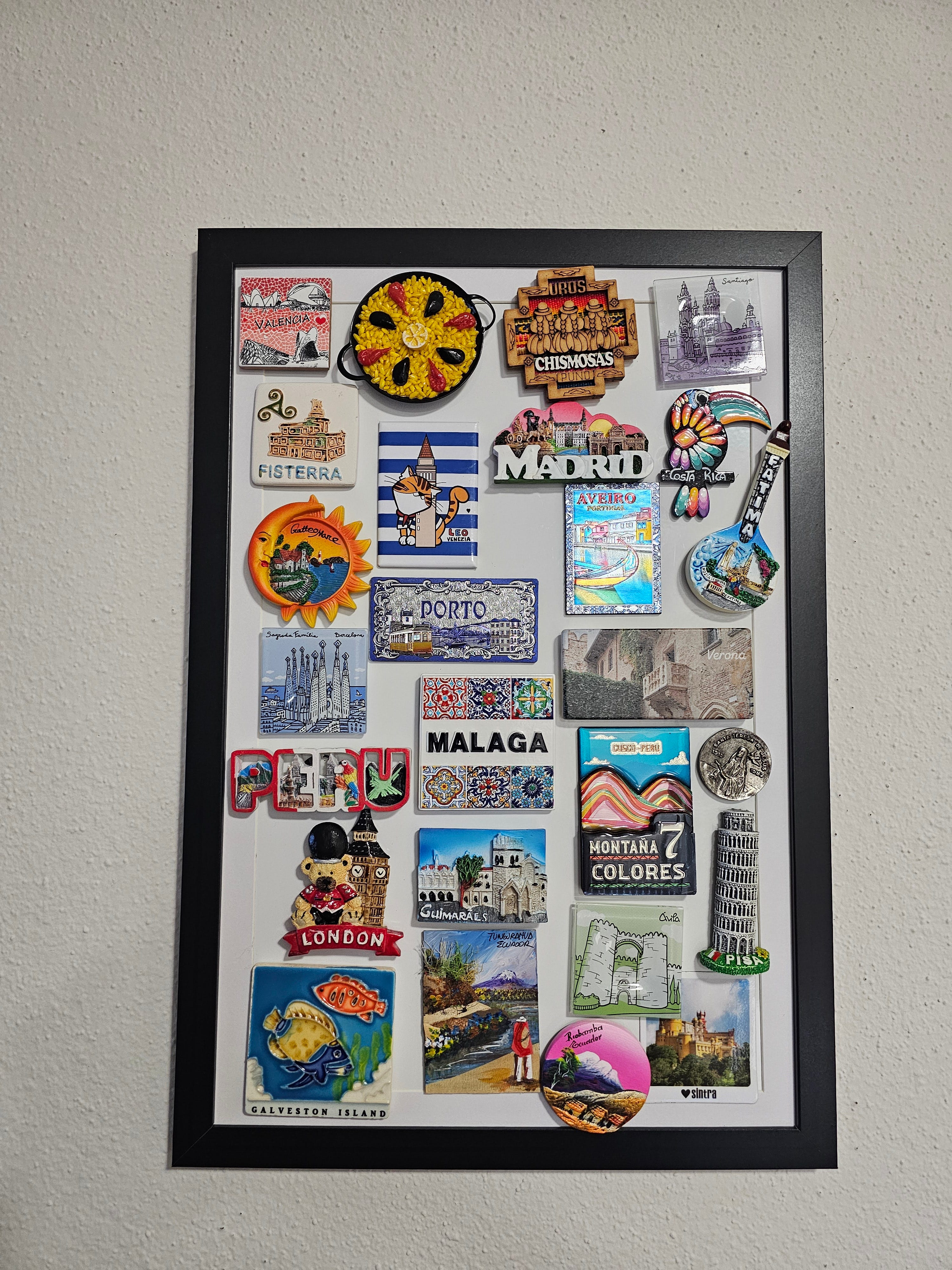
These things weren’t just for reminiscing, nor did they just sit untouched on a shelf. I actually used them.
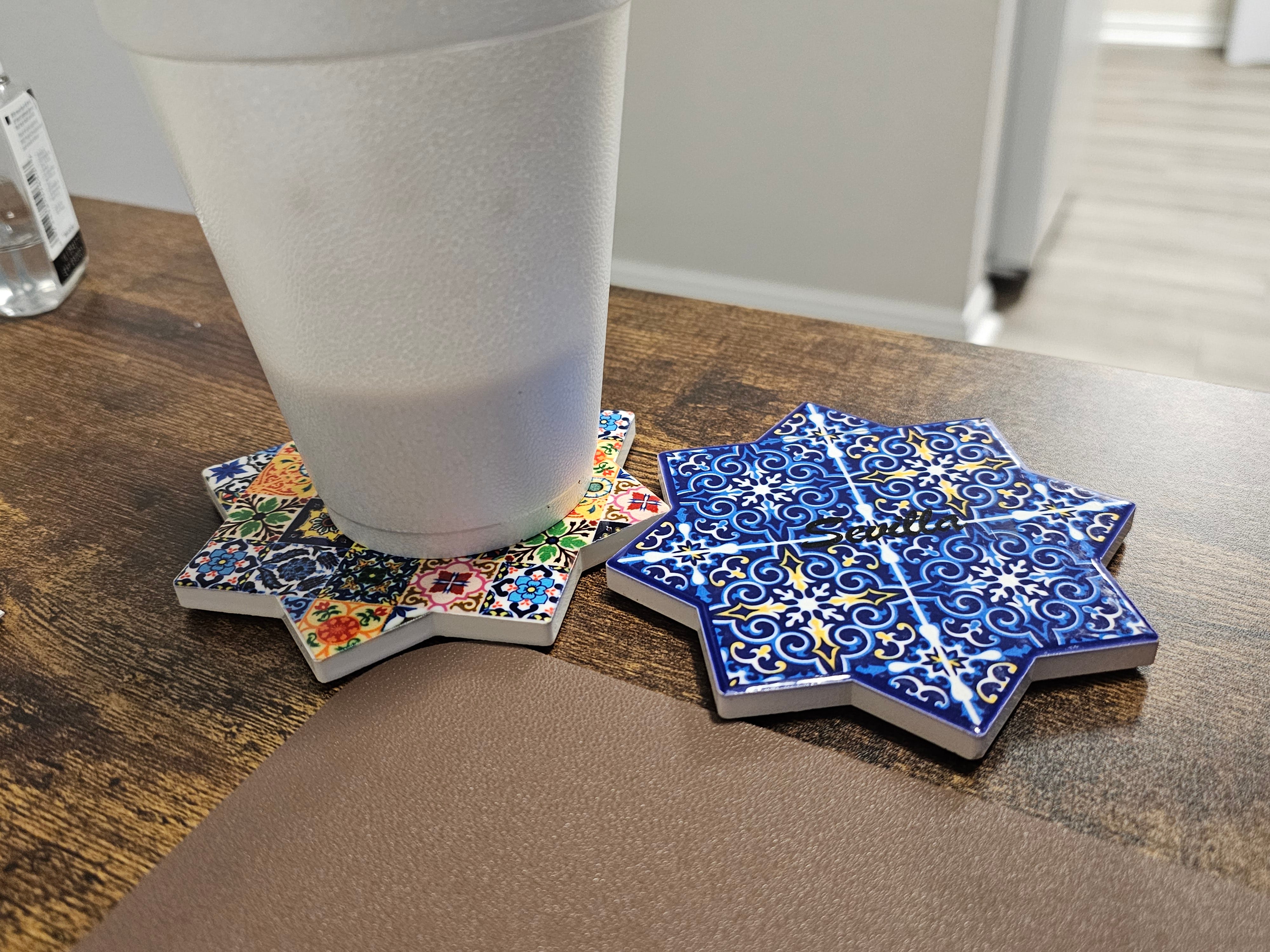
And maybe that’s why it was harder to let them go, because they were both memories and ordinary household objects at the same time. They were proof that I had been to places I once only read about but they had also quietly become part of the background of my everyday life.
After a trip, I get post-travel blues and everything seems unreal. I remember thinking more than once, if it weren’t for the pictures, I’d think the trip didn’t happen. Of course I knew it happened, but memories blur surprisingly quickly. Having those objects remind me that yes, I went to those countries because how else would I be draped in an alpaca poncho in the middle of the Houston heat?
As much as I treasure these mementos, however, I know I need to get rid of some of them. Of course, a twinge of sadness washes over me each time I deliberate whether to put this magnet in the Keep box or donate it.
But maybe that isn’t necessarily a bad thing.
When you finish a book, you reach the last page and close it. The story didn’t lose value just because it ended. The story stays with you long after the final chapter closed, and there is actually something satisfying about completion.
So, I kept some things. Some are coming with me. Some went into what I have started calling my “Shit-hits-the-fan-and-we’re-back-in-Texas box”. Others, unfortunately, I decided to donate.
Not because those things meant less, but I fully understand that something simply gotta give if I want to move forward.
The same thing goes for my nursing career.
So, What Do You Do?
For fourteen years, I have been a nurse.
And now, I’m not working as one.
That should be an easy enough sentence to say, and technically it is. The problem is when somebody asks, “What do you do?”
I fucking hate that question, because… what do you mean, what do I do?
Do you mean what do I do for work? I don’t work at the moment.
You mean, what am I doing in your country? Galivanting.
What do I do with my Tuesday afternoons? Scratch my non-existent balls.
It annoys me for the same reason “Where are you from?” annoys me. Do you mean where I was born? Where I live? Where I was immediately before arriving here? My ethnicity?
Why can’t people just ask what they actually want to know, for Christ’s sake.
For most of my adult life, the answer to “What do you do” was easy:
“I’m a nurse.”
Now, the technically accurate answer would be, “I’m a nurse but I’m not currently practicing.” But that sounds like an explanation when nobody asked for one.
But saying “I’m an English teacher”, isn’t accurate either because… I’m not. I teach Medical English and IELTS Preparation. I teach how to English in healthcare, if that makes sense. Please don’t come to me asking about the present perfect tense because we’re both gonna have a bad time.
So perhaps, for the foreseeable future, my answer will simply be, “I’m traveling. Nice to meet you.”
The One Thing I Know How to Do
You know, the weird part— now that we’ve talked about nursing—is that nursing itself gave me very little beyond money.
It’s not as if my numerous encounters with life, death, and literal shit were good material for writing my blog. It didn’t feed my creativity. If anything, it dried up all my creative juices because nursing isn’t a profession where creativity is particularly encouraged. There are protocols, standards, policies and procedures, and there are very good reasons why you cannot decide to origami your way through a central line dressing change.
It did not give me a deeper appreciation of life either. You’d think that after seeing people get back from the dead — we call it ROSC but y’all can call it the miracle of life or God’s plan— I’d get some enlightenment and be on my way to Nirvana and be the Sage of the Six Paths (wait, am I confusing Naruto here?).
Actually—no. Years of exposure to illness, death, infections and dysfunction deepened my cynicism and pushed me into periods of depression and borderline alcoholism.
And obviously, nursing did not make me happy because if it had, I probably wouldn’t be throwing away a perfectly good, stable American life to embark on a midlife-crisis-fueled sabbatical.
Nursing, to me, was a parasite that fed off me, and the product of its metabolism is the ever-coveted money.
At least here in the States. I heard that other countries have it shit in terms of monetary compensation. My condolences, fellow RNs.
(On that note, y’all wanna get the US nurse money? Come study Medical English with me, and let me teach you how to talk back to racist mfers without losing your license. Just kidding.)
Still, I can’t pretend nursing is irrelevant to me now just because I quit my job.
I just closed the door on nursing, but I didn’t lock it. And it isn’t one of those steel doors I’ve slammed shut in my lifetime.
What I’m saying is, I am aware and I fully accept the very real possibility of returning to nursing if the situation requires me to.
I built a fourteen-year career, and I know that even if I walk away from it for a year or two, that history is strong enough to get me through at least an HR interview if shit hits the fan.
That is simultaneously comforting and irritating.
Comforting because I have a fallback.
It’s irritating because I spent so much time being a nurse and not being anything else, that I don’t have many other marketable skills that I can leverage. For instance, I cannot bake cookies for money. I cannot get a gig as a barista without quitting by lunchtime from all the different sweeteners and multiple pumps of breast milk, and what the fuck is an Oleato?
I cannot teach little children without somebody eventually crying, and there is a decent chance that person would be me.
I can’t even make cute arts and crafts to sell on Etsy without slicing off my finger.
But fuck it, give me a Foley catheter and I can get that fucker into a female urethra with one hand tied behind my back.
Building My Own Safety Net
For some people, a sabbatical is a break. They stop doing their jobs for a while, go somewhere, get some rest, see some things, and when they have had their fill, they return to their previous lives refreshed and ready to resume what they’ve left behind.
Mine is different.
Mine is an experiment to see if I can be anything other than a nurse.
More specifically, it is my attempt to find out what happens when nursing becomes an option rather than the default.
Now, because this is an experiment— and as a Taurus, I’m quite risk-averse— I tried to make this as safe as reasonably possible.
I’m talking about savings. Emergency funds. Credit cards. My nursing license. My American citizenship. Friends in Houston. Asset liquidation. Return plans. Backup plans. Backup plans for the backup plans.
It might seem like overpreparation for others, but to me, who doesn’t have inborn security nets, I gotta make them myself.
I learned early on in life that security is necessary. That money matters.
If I had twice as much saved, I’d feel safer. In no universe will I ever bullshit myself into pretending otherwise.
Originally, I set my emergency fund at $10,000, and then realized after more research and planning that I had underestimated what returning to Texas would actually cost. I had not properly accounted for things like one or two months of rent deposit depending on the landlord, transportation costs while looking for another car, and all the other annoying little expenses involved in rebuilding a life from scratch.
So, I increased the budget. I did the same for all the other funds and the entire timeline, in fact.
Just to be clear, though, that wasn’t anxiety moving the goalpost for no reason. It was better information producing a better plan.
The same thing happened with the way I wanted to travel.
At first I thought I could simply enter countries as a tourist and leave whenever my allowed time is up.
Then I remembered who I am. I’m brown, broke and third world… and a Taurus. And I’m also too old for that backpacker shit.
I don’t want to spend months hopping from one hostel to another, dragging my entire life behind me and sleeping in bunk beds beside eleven strangers, pretending to be a social animal. I need a base of operations, so to speak. Somewhere I can stay long enough to establish some semblance of life.
That was why the Ecuador professional visa mattered so much to me. It represented stability.
Unfortunately, I don’t have the same privileges as some people do, so I tried to manufacture my own stability.
But then my beloved alma mater, FEU, happened.
When Plan A Goes to Shit
Without turning this into an essay about Philippine politics and bureaucracy, there were documents required for the professional visa that depended on my university cooperating with requirements from SENESCYT. What followed was the same bureaucratic red tape and buck-passing I grew up with, apparently preserved in fucking adobo marinade and completely untouched by time.
Putangina was said an unmeasurable number of times.
I had a genuine crashout because for a moment, it felt as though the whole sabbatical had collapsed before it even started.
Eventually, after the anger subsided enough for my brain to return to focus, I realized something painfully obvious:
A detour is simply a detour.
The road did not disappear, Point B is still there, and Ecuador didn’t evaporate.
The professional visa was just one way of entering the country. In fact, Ecuador itself is just one country out of the entire South American continent, and the rest of the world.
That means I can still enter Ecuador as a tourist, stay, and leave when I need to. If it doesn’t work, then there are other countries.
Honestly, that isn’t my ideal path, but that’s the one available to me so I’ll make it work.
Weirdly, that whole experience made me both more relaxed and more structured at the exact same time. I’m more relaxed because I realized I no longer interpret a failed plan as “abort mission”. It simply means, let’s pull up Plan B.
But that flexibility only works because I have other plans waiting. There would be no Plan B to pull when Plan A fails if I never bothered creating Plans B through Z.
So I still need structure.
Apparently, These Are the Necessities
A funny discovery I made while I’m getting rid of seven years’ worth of possessions is that I keep finding things I genuinely need for the next version of my life that I did not own before.
Things like:
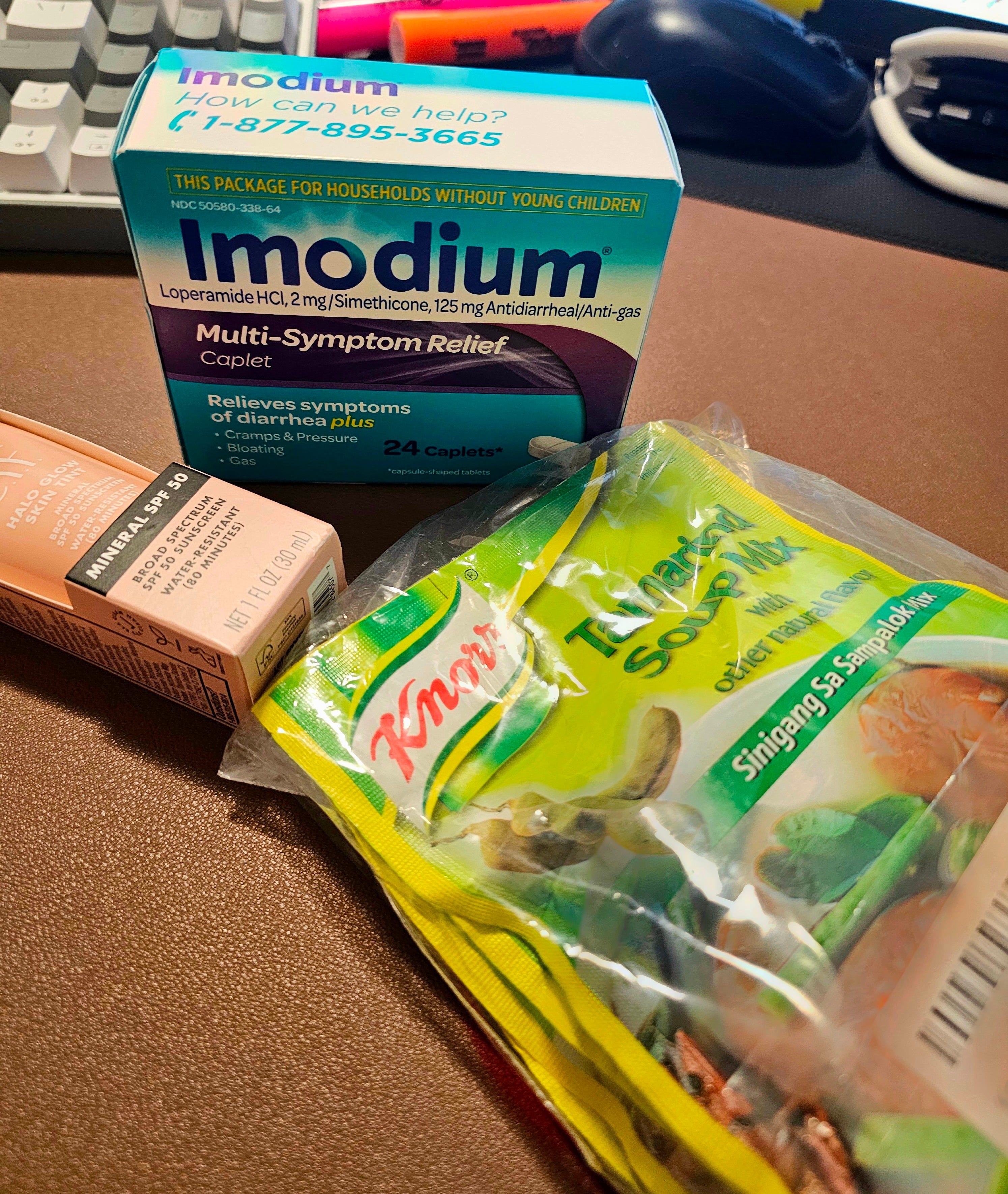
-Immodium
-Pimple patches
-a compact backlit keyboard
-a second monitor
Apparently, after disposing an entire apartment, these are the necessities.
I know perfectly well that I can survive without a separate keyboard, or a desk pad, or a second screen. I’m sure nobody has ever died because their Airbnb work setup only had one monitor.
But I also want to write more in this version of my life. I want to blog. I want to research without squinting at 12 tabs compressed into one laptop screen. I am building The BedsideLingo Academy. I want to be able to Google teaching methods that I can apply to my students.
If I am deliberately designing a life where teaching, writing and creating occupy more space than nursing did, then I need the tools that make those things easier matter to me.
And that’s probably the biggest correction I have made to my definition of “need”.
Making Room
I’m not contesting the very real problem of overpacking, but honestly, I don’t want to become a minimalist. That doesn’t mean I’m a maximalist either. I mean, I’m Filipino; we say “matutong mamaluktot habang maiksi ang kumot” — learn to curl up while the blanket is short— but I don’t intend to live forever with a maiksing kumot.
I don’t think owning less is more virtuous. I like things. I like comfort. I like having objects around me that are useful, beautiful, and familiar. In fact, I’m bringing some ridiculous things—like my money cat— halfway across the world because they make my life better, and I have no intention of apologizing for that.
What I’m learning in this journey is that necessity changes when life changes.
Some things that were useful in Houston have no place in the life I’m building next. Some things I once thought were absolutely essential turned out to be just one of the many paths that could take me where I plan to go. Some things I thought I could never leave behind because of the sentimental value turned out to be things I can safely store without losing the memories attached to them.
And some completely ordinary things I never thought about are suddenly worth precious suitcase space.
Like Sinigang Mix and Mang Tomas.
I suppose that is what letting go actually looks like for me.
I am not emptying my hands just for the sake of shedding weight.
Rather, I am making room for something else and so much more.